Showing posts with label films. Show all posts

Friday, January 23, 2015

REPOST: If Critics Chose the Oscars: 2015 Edition

The Oscars (Academy Awards) is an annual American awards ceremony celebrating and recognizing the various cinematic milestones of the year. As The Oscars draws near, critics make their own list of nominees and winners for each major award enumerated in this TIME article below.

Image Source: time.com

They're not members of the Academy, and they don't vote as Oscar handicappers. But the consensus selection of critics groups indicates wins for Boyhood, The LEGO Movie, J.K. Simmons and Patricia

So, for the sixth consecutive year, TIME has tabulated the votes of awards-giving movie societies — 34 this time, listed at the bottom*. Canvassing Kristopher Tapley’s In Contention awards blog, I assign one point to the winner in each category from each group; ties get a half-point. No points for runners-up or for subsidiary actor categories such as Breakout, Ensemble or Youth in Film.

We won’t know whether the Academy agrees with the critics until Oscar night, Feb. 22. For now, check out all the winners and contenders in 10 categories, plus my speculation on how the members of the Academy might vote.

Best Actor: Michael Keaton, Birdman, 16½; Jake Gyllenhaal,Nightcrawler, 7; David Oyelowo, Selma, 3; Tom Hardy, Locke, 2; Timothy Spall, Mr. Turner, 2; Ralph Fiennes, The Grand Budapest Hotel, 1; Brendan Gleeson, Calvary, 1; Eddie Redmayne, The Theory of Everything, 1; Oscar Isaac, A Most Violent Year, ½.

Keaton, the critics’ consensus fave, should get a lot of love from the Academy for his gutsy performance as a worn-out actor at career crisis. Gyllenhaal finished strong as a creepy cameraman and is assured an Oscar nomination. In the battle of actors playing real-life Cambridge math geniuses with disabilities, Redmayne’s Stephen Hawking is a flashier and, oddly, cuddlier turn than Benedict Cumberbatch’s Alan Turing in The Imitation Game. The Screen Actors Guild, which has many members among Academy voters, nominated Cumberbatch, Gyllenhaal, Keaton, Redmayne and, for Foxcatcher, Steve Carell. Fingers crossed that fifth place goes to Fiennes’ grandly mannered performance in the most substantial box-office hit on this list.

Best Actress: Rosamund Pike, Gone Girl, 11; Marion Cotillard,Two Days, One Night and/or The Immigrant, 8; Julianne Moore, Still Alice, 5; Reese Witherspoon, Wild, 4; Essie Davis,The Babadook, 2; Gugu Mbatha-Raw, Belle, 2; Patricia Arquette,Boyhood, 1; Tilda Swinton, Only Lovers Left Alive, 1.

The Oscar shortlist should be Moore (a four-time nominee), Witherspoon (winner for Walk the Line in 2006) and the English back-bencher Pike, promoted to Cabinet status as Amy the Gone Girl, plus Felicity Jones as Hawking’s wife Jane in The Theory of Everything and maybe Jennifer Aniston in Cake; those are also the five SAG finalists. Cotillard, a 2008 Oscar winner for playing Edith Piaf in La vie en rose, has little chance of getting the Oscar benediction for either of her 2014 roles. Plaudits to the Central Ohio and North Carolina critics for fêting Davis as the beset mom in The Babadook. The L.A. critics named Arquette in this category, which you can slide into Supporting Actress to pad Arquette’s enormous lead.

Best Supporting Actress: Patricia Arquette, Boyhood, 20½; Tilda Swinton, Snowpiercer, 4; Jessica Chastain, A Most Violent Year, 3½; Carmen Ejogo, Selma, 1; Keira Knightley, The Imitation Game, 1; Agata Kulesca, Ida, 1; Rene Russo,Nightcrawler, 1; Octavia Spencer, Black or White, 1; Emma Stone, Birdman, 1.

The Oscar is already Arquette’s. She has a signature role in a movie the Academy will want to honor several times, and her competition is slim-to-none. Chastain has a shot at an Academy nomination for a late-screening film, though she didn’t make the SAG shortlist. The final five there: Arquette, Knightley, Stone, Meryl Streep in Into the Woods and Naomi Watts in St. Vincent.

Best Supporting Actor: J.K. Simmons, Whiplash, 25½; Edward Norton, Birdman, 7; Mark Ruffalo, Foxcatcher, 1; Tyler Perry, Gone Girl, ½.

The lopsided lead for career utilityman Simmons accurately reflects his status as prohibitive favorite in this year’s Oscars. If he had any serious competition, and he doesn’t, it would be Norton, who does the gaudiest, most enjoyable work in Birdman. SAG filled out its card with Ruffalo, Robert Duvall in The Judge(arguably a leading performance) and Ethan Hawke as the dad inBoyhood.

Original Screenplay: The Grand Budapest Hotel, 13;Birdman, 7½; Nightcrawler, 3; Selma, 2; Boyhood, 1½; Beyond the Lights, 1; Calvary, 1; The LEGO Movie, 1.

The first five titles here could be the Academy quintet of nominees — unless the members blame the Paul Webb script forSelma‘s treatment of Lyndon Johnson as the challenger, not the champion, of Martin Luther King Jr. in the push for voting rights. The Writers Guild of America, whose stringent rules excluded both Selma and Birdman (a sure Oscar screenplay nominee) from eligibility, chose these five finalists: Boyhood,Foxcatcher, The Grand Budapest Hotel, Nightcrawler andWhiplash.

Best Adapted Screenplay: Gone Girl, 12; Inherent Vice, 2½;Guardians of the Galaxy, 1; The Imitation Game, 1; Obvious Child, 1; Whiplash, 1; Snowpiercer, ½.

Not much competition for Gillian Flynn, who wrote the Gone Girl novel and screenplay. The WGA nominees were American Sniper, Gone Girl, Guardians of the Galaxy, The Imitation Game and Wild. The script for The Theory of Everything, which the WGA deemed ineligible, is a likely Oscar finalist. And if you’re wondering why Whiplash got an Original Screenplay nomination from the WGA and an Adapted award from the Indiana critics group, it’s because director Damien Chazelle made a short version of his movie to raise money for the feature.

Best Documentary: CITIZENFOUR, 16; Life Itself, 12; The Overnighters, 2; Glen Campbell: I’ll Be Me, 1; Keep On Keepin’ On, 1.

It’s a battle between two dominant personalities: one in the world of film (critic Roger Ebert for Life Itself), the other in the whole world (whistleblower Edward Snowden forCITIZENFOUR). Both films made the preliminary round of 15 features chosen by the Academy, which also includes The Overnighters and Keep On Keepin’ On.

Best Animated Feature: The LEGO Movie, 20; The Tale of the Princess Kaguya, 3; The Boxtrolls, 2; Big Hero 6, 1; How to Train Your Dragon 2, 1.

Again, the critics’ majority favorite will snag an Academy Award. With a $257-million score at the domestic box office (fourth best for 2014), The LEGO Movie is also the year’s only blockbuster likely to win an Oscar.

Best Director: Richard Linklater, Boyhood, 22; Alejandro G. Iñárritu, Birdman, 6; Ava Du Vernay, Selma, 3; Dan Gilroy,Nightcrawler, 2; Clint Eastwood, American Sniper, 1.

Linklater, shooting his movie over 12 consecutive summers, and Iñárritu, pretzeling his cast and crew into executing labyrinthine shots lasting 10 mins. or more, would get Oscar-nominated just for pulling off impossible stunts. But what about the other three? I’d say Eastwood stands the best chance of earning a place in the Academy’s fave five — and that, in several categories, American Sniper will register more impressively with the Academy than it did with the reviewers. James Marsh (The Theory of Everything) and Morten Tyldum (The Imitation Game) might fight for a slot or each get one. But Linklater, as his overwhelming victory with the critics’ groups indicates, will be the one giving a speech on Oscar night.

Best Film: Boyhood, 17; Birdman, 6; The Grand Budapest Hotel, 3; Selma, 3; Gone Girl, 1; Goodbye to Language, 1; A Most Violent Year, 1; Nightcrawler, 1; Snowpiercer, 1.

With wins in fully half of the critics’ groups, Boyhood is also the leader in the Oscars’ Best Picture race. Birdman, Gone Girl, The Grand Budapest Hotel, Nightcrawler and Selma, plus American Sniper, The Imitation Game and The Theory of Everything, could fill eight other slots in this bounteous Academy category. The Producers Guild of America, another industry group that overlaps significantly in Academy membership, chose eight of those nine — minus Selma, and adding Foxcatcher and Whiplash— as its 10 nominees. SAG, which choses five films to compete for its Outstanding Performance by a Cast award, boiled the list down to Birdman, Boyhood, The Grand Budapest Hotel, The Imitation Game and The Theory of Everything. Again, Selmawas excluded; it’s said that Paramount didn’t get screeners of this Christmas Day release to the guilds on time. So don’t expect the critics’ year-end favorite to provide an insurmountable obstacle to Linklater’s patient story of the boy who grew up.

*The 34 organizations surveyed: local or regional critics’ groups from Austin, Boston, Boston Online, Central Ohio, Chicago, Dallas–Fort Worth, Detroit, Florida, Georgia, Indiana, Iowa, Kansas City, Las Vegas, Los Angeles, Nevada, New York, New York Online, North Carolina, North Texas, Oklahoma, Phoenix, San Diego, San Francisco, Southeastern, St. Louis, Toronto, Utah, Vancouver and Washington, D.C.; plus the African American Film Critics Association, the Black Film Critics Circle, the National Board of Review, the National Society of Film Critics and the Online Film Critics Society.

Hello! My name is Louis A. Habash and I enjoy watching a good film. Follow me on Twitter for the latest news and reviews from the movie scene.

Monday, March 24, 2014

REPOST: Garden Buys Stake in Indie Film Bastion

Tribeca Enterprise already made a deal with Madison Square Garden Company. Read more from this NYTimes.com article.

****

LOS ANGELES — Tribeca Enterprises, the Manhattan-based independent film concern co-founded by Robert De Niro, has agreed to sell a 50 percent stake to the Madison Square Garden Company in a deal that values Tribeca at $45 million.

Image Source: thefilmchair.com

The deal, which the partners announced on Saturday, brings together two of New York’s highest-profile show business brands, one wrestling with ambitions that it has never quite been able to achieve on its own — Tribeca — and the other a deep-pocketed sports and live entertainment company that is also looking to expand.

 “You do get to a point when you’re a start-up, in essence, when you can’t do it alone,” said Jane Rosenthal, Tribeca’s chief executive. Ms. Rosenthal, an experienced producer of movies like “Meet the Parents,” founded the Tribeca Film Festival in 2002 with Mr. De Niro and Craig Hatkoff.

Tribeca Enterprises has grown into much more than a downtown festival, the annual installment of which begins on April 16 and will include 89 feature films and 58 shorts culled from more than 6,100 submissions. Among other ventures, Tribeca also runs international film events, a two-screen theater, a digital studio and a fledgling division that releases specialty movies both digitally and in theaters.

But its festival, founded as a cultural balm for the Sept. 11 terrorist attacks, is by far Tribeca’s biggest asset, and the Madison Square Garden Company’s interest says something important about such events: Once largely ad hoc artistic celebrations, some film festivals have, in fact, become promising businesses.

The partnership also cuts to the heart of New York indie-film politics by expanding the reach of James L. Dolan, the executive chairman of the publicly traded Madison Square Garden Company, whose holdings include its namesake arena, Radio City Music Hall, the New York Knicks basketball franchise and the New York Rangers hockey team.

The company’s deal for Tribeca comes amid a recent setback. On Friday, the company’s MSG Productions group announced that “Heart and Lights,” a new dance-oriented show featuring the Rockettes that it was producing at Radio City, was canceled less than a week before its scheduled opening and delayed until at least 2015.

Mr. Dolan, a close friend and occasional business partner of the movie executive Harvey Weinstein, sits on the board of AMC Networks, which owns SundanceTV, the IFC channel and IFC Films, a major art-house distributor. Mr. Dolan, who will join the Tribeca Enterprises board, is also the chief executive of Cablevision Systems, the New York City-area cable provider.

 Speaking by telephone, Ms. Rosenthal and Tad Smith, the Madison Square Garden Company’s new chief executive, offered few details of their plans together but emphasized their lofty aspirations. “You put these two companies together, and the world is our oyster,” Mr. Smith said.

Ms. Rosenthal said Tribeca intends to expand its festival-related programs greatly by taking advantage of the Madison Square Garden Company’s real estate across the country, which includes the Beacon Theater in New York, the Wang Theater in Boston, the Forum in the Los Angeles area and the Chicago Theater.

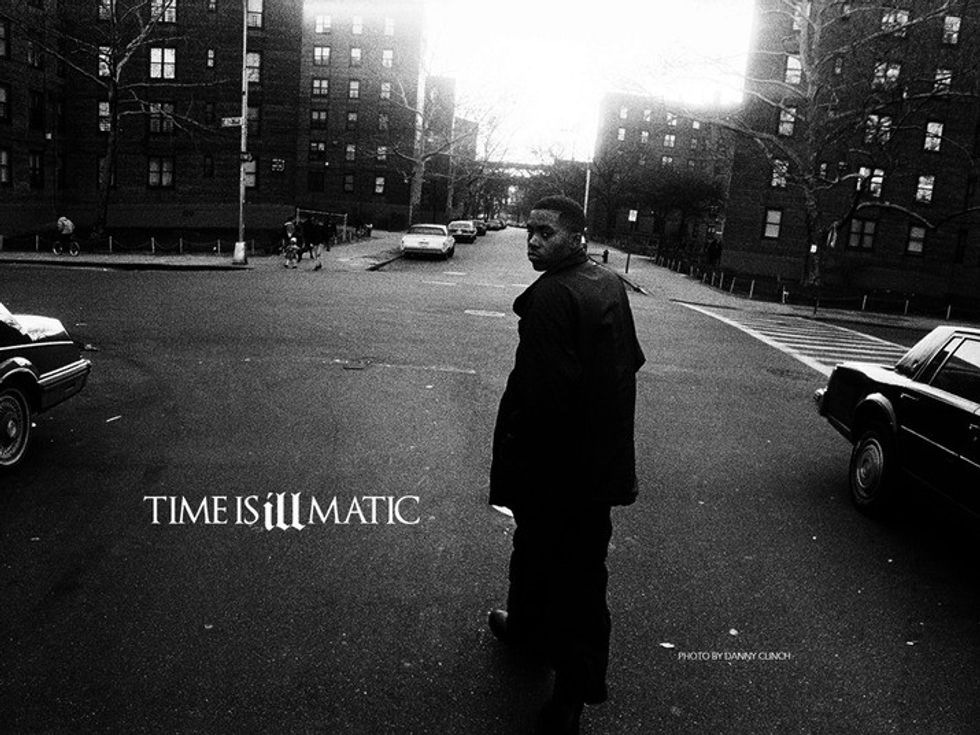
Opening night at Tribeca’s festival in April, for instance, will be held at the Beacon on the Upper West Side. For the first time, Tribeca will sell tickets to the event, which has historically been an invitation-only screening. This year’s kickoff will include the premiere of “Time Is Illmatic,” a documentary about the rapper Nas, who will also perform.


Image Source: okayplayer.com

Tribeca and the Madison Square Garden Company will also “explore joint sponsorship opportunities,” Mr. Smith said. But he said there are no immediate plans to funnel Tribeca films into MSG Networks, which includes a regional sports television channel, and Fuse, a music channel.

Tribeca’s sale does not give the Madison Square Garden Company majority control — for now. “Over time, we have opportunities to increase our stake, and we are optimistic that will happen,” Mr. Smith said.

Ms. Rosenthal will continue to run Tribeca Enterprises with its current president and chief operating officer, Jon Patricof, a nephew of the co-founder Mr. Hatkoff. Mr. De Niro “remains right where he always has been, which is very involved,” Ms. Rosenthal said. Tribeca employs about 70 people, and no layoffs are planned, according to a spokeswoman.


Image Source: zimbio.com

Ms. Rosenthal said the decision to sell half of Tribeca was in no way tied to her recent divorce from Mr. Hatkoff, who remains involved with the company. “Church and state,” she said.

Although it still trails the older Sundance Institute, Tribeca has succeeded in creating a strong brand in a very short time, and its festival’s film selections are increasingly respected by Hollywood insiders. Tribeca has also carved out a reputation for aggressively experimenting with new ventures; one of the latest is called Tribeca Innovation Week, which is dedicated to storytelling via new technologies.

But in some ways, the company has struggled. Its distribution division, Tribeca Film, has released about 30 movies in theaters over the past three years and taken in less than $1 million total, according to Box Office Mojo, a ticket sales database.

Asked if she thought Tribeca Film was faring better, worse or about how she expected, Ms. Rosenthal said, “Nothing is ever what I expect, and I suppose I should end that sentence there.” Tribeca Film has found several video-on-demand hits, including “How to Make Money Selling Drugs” and “The Wild and Wonderful Whites of West Virginia.” Two of its recently released two foreign films — “War Witch” and “The Broken Circle Breakdown” — received Oscar nominations.

Correction: March 22, 2014 An earlier version of this article misstated the day that this year’s Tribeca Film Festival will begin. It is April 16, not April 13.  

To get more updates and reviews about films, visit this Louis A. Habash Facebook page.

Wednesday, July 24, 2013

REPOST: The Movies: A Fading Flame

Warren Adler points out the distinction between the old and new films in this Huffington Post article.

At the outset, let me state unequivocally that I have had a lifetime love affair with the movies. The affair spans the golden age of Hollywood films and as evidence of this heartfelt attachment, I can name most of the actors in black and white films, B movies included.

I inherited this addiction from my mother who would take me with her whenever the movies changed their bill, even in the middle of the week when I should have been doing my homework. Her lure was not only the movie itself but the collection of dishes the theaters would give away free to corral their patrons during the dark days of the depression.

The movie bill in those days consisted of a double feature, news of the day, a cartoon or two, and a minute or two of coming attractions -- meaning the pictures that were on deck to be seen in the next few days. There was no popcorn, only a vending machine that would dispense packaged candies for a nickel (about six choices).

Those old birds from the studios who lured you into the movie theaters were the most brashly creative propagandists and advertising geniuses of their day. They built a star system that made gods and goddesses of their actors, slapping their images all over the place, on billboards, fan magazines and gossip columns, and used the mass media with unprecedented skill, verve, and chutzpah.

Indeed, they made you believe that those actors whose love affairs and 'derring-do' actually happened to them in real life and seduced you to glimpse into their lurid personal lives, stunted perhaps by the fact that these actors, mostly uneducated and insecure, began to believe that they were the characters put up on that 35-foot screen. Indeed, those movie promoters invented the modern celebrity machine.

They gave away dishes and other items that lured you into the theaters in the middle of the week. They sponsored contests for kids. They coupled the movies with live entertainment like Sinatra, Milton Berle, Martin and Lewis, and many others.

They built faux palaces that made you feel you deserved the importance of entering a baroque castle with lots of gold paint and chandeliers. Remnants remain, of which Radio City Music Hall was the epitome of the era, a relic that has retained its luster but no longer shows movies.

Their advertising in the newspapers was over the top with exaggeration and drum beating bull which to this day continues its legacy of faux praise, much of it bought and paid for.

The language of the lure is still over the top only more so. Ever really read a movie blurb? They are hilarious, extracted from reviews by anyone with a computer and an opinion, but who looks at the source? Some are from the top tier of reviewers from the New York Times and other big city newspapers; others are from magazines, entertainment trade papers, television "critics", assorted bloggers and movie critic sites where self-proclaimed "reviewers" abound, all with one thing in common: "opinions" hungry to see their critiques quoted and hopeful that their sites attract advertisers.

Here are some samples extracted from newspapers flacking new offerings, which will remain anonymous. I'll dispense with "Best Picture", "Best Actor" -- which are ubiquitous and the absurdist exaggerations -- like the overused "Brilliant", "Ravishing", "Remarkable", "Breathless", "Imaginative" and the all-purpose "Most" to underline the point.

Then there is the blockbuster word "Masterpiece" and, of course "Winner", of the various festivals and resumes of directors for past films all embellished with an avalanche of praise words lifted from Mr. Roget's handy thesaurus. Sometimes the flack writer will get really creative and spew "We're Too Busy Laughing" or "The Level of Craft is Something to Behold" or "An Erotic Mindbender" or "Thrillingly Hypnotic", or "Give Us More Like This One", heaven forbid, and the all-purpose "You Won't Believe Your Eyes" or "So Good You Will Have to See it Twice."

For the "save the world" filmmakers, who offer what they believe is life-changing movies, you will find specific hype headlines like "Uncompromising", "Brave", "Courageous", "Fearless", "Daring", and that all-purpose word of the righteous activist, "expose."

Then there are the groups who treat film as a cultural icon and a matter of scholarly inquiry with another cluster of hype words like "classic", "enduring" and "vintage."

Of course in today's world the lure goes beyond mere words. You have to endure a tsunami of advertising if you enter a movie theater on its advertised time entrapped and forced to endure 15 minutes or more of earsplitting commercials, many designed to get you to buy the obesity-encouraging, overpriced menu of life menacing goodies, served in the lobby concessions.

As if this was not enough brainwashing, you still have to endure endless coming attractions, usually eardrum endangering snippets from the latest movie spinoffs of computer games targeting the pre- and early teen set. By the time one gets around to the start of the movie, a half hour or more beyond the published feature time, you are exhausted by the assault and your potential film enjoyment meter has been compromised.

In the golden age of the black and whites, the coming attractions were five minutes long and your concentration on the story being presented on the screen was still fresh and expectant.

There is a sense, even as I write this rant, that the movie auditorium, meaning where groups sitting together in the dark, munching on unhealthy foods while being attacked with endless hype are the last gasp of a desperate industry running out of ideas as they enter an uncertain future.

As I said at the onset, I loved the movies, even the very few being offered today for those of even average intelligence, but I fear a total disenchantment is on its way, unless the moguls come up with a more engaging product for people of all ages and stop trying to overstuff us with all the hype and brainless baloney.

As a film historian, Louis A. Habash watch films for a living. Get to know him more by following this Twitter page. 


Wednesday, May 22, 2013

REPOST: The Hangover Part III: The third time’s the harm

Time Entertainement says that 'The Hangover Part III' is so aggressively nasty and barely funny that only the movie's most hardcore fans will enjoy.  Hmmm ... Let's find out and see.  Read the details below:  


Todd Phillips’ deliberately offensive films have always courted controversy but The Hangover Part III marks a tonal shift for his successful franchise. The movie is so aggressively nasty and barely funny that it feels as though Phillips is trying to cull his own wolfpack down to only the most hardcore fans. The tagline on The Hangover Part III’sposters is “THE END” and there may be some wish fulfillment implied. The Hangover Part III gives off such a stench of creative decay that it hardly seems possible that even Phillips or his co-writers have any use for the movie themselves. If a movie can be self-loathing and self-destructive, it’s this one.


Image source: Entertainment.time.com


Even the impetus behind the journey, which does include a trip back to Las Vegas, the scene of the wickedly fun original, is bleak. Instead of a rollicking bachelor party enhanced by drugs, there’s a funeral, followed by an intervention. Alan (Zack Galifiankis) has been off his meds for six months when the movie begins. He is enticed to enter a treatment facility in Arizona by a promise that as Phil (Bradley Cooper) and the rest of the Wolfpack, Stu (Ed Helms) and the guy who always gets left behind, Alan’s brother-in-law Doug (Justin Bartha), will drive him there. Of course, the trip to Arizona is derailed—and the purpose of it completely forgotten—by an encounter with a drug lord-type named Marshall (John Goodman) and his henchmen, including “Black Doug” from the first film. Marshall demands the guys find and bring him Mr. Chow (Ken Jeong), who double-crossed him around the time of the first Hangover.


Alan’s specific mental-health issue has remained vague throughout the series but whatever it is, it leads to some spectacularly dunderheaded and mean behavior. In his first scene in The Hangover Part III, Alan drives down the freeway pulling a wagon with a giraffe upright in it. It’s his new pet. The giraffe is obviously almost entirely computer-generated but still looks smart, soulful, friendly. It is decapitated by an overpass and the severed head plunges nose first into the windshield of an approaching car. The preview audience I was with seemed stunned into silence. Not by what had happened—the outcome is telegraphed from the beginning of the scene—but by a sort of largerwhy? Hardly anyone laughed.


What a contrast to the hilarity of the sight gag of that tiger in the bathroom of the Vegas hotel in the original movie. Even the abused, penis-nibbling monkey in The Hangover Part II seems slightly amusing in comparison. The dead giraffe served no purpose except to be grossly provocative. As oily pretty-boy Phil, Bradley Cooper demonstrated in the two earlier movies an uncanny ability to make almost any line funny, but here he’s reached his limits. It’s not the game Cooper’s fault, but the screenwriters. No one, not Ernie Kovacs or Johnny Carson or Mel Brooks or even Chris Rock could make Phil’s line “Oh come on, he killed a giraffe, who gives an [expletive]?” funny. Other jokes that fail involve the cruel ends of a pair of guard dogs and some chickens trained for cockfighting and fueled on a diet of cocaine. They are variously shot, smothered, drugged, etc…


The threat to the dogs even causes the cynical Phil to protest. “I didn’t know you worked for PETA,” says Mr. Chow (Ken Jeong, reprising his role from the earlier films). “What a [expletive].” Maybe that line is supposed to make the audience feel chagrined about being such softies as well, but it isn’t witty enough to work. I suppose the dumb beasts give the steadily ridiculed character of Mr. Chow someone to look down on. Homophobia and underlying racism directed at Asians permeate this movie just as they did the others, with the ambiguously sexed Mr. Chow—he had or has a wife but, like Alan, can’t stop drooling over handsome Phil—subject to considerable verbal abuse.


Despite everything, Jeong has turned playing Mr. Chow into some strange art form. He gives the character radical style and confidence; no wonder Mr. Chow has become the central figure in The Hangover Part III. Phillips arguably couldn’t make another movie without him (although blessedly, that promise that this is “The End” does seem serious). The impish, outrageous mischief maker is the only force propelling the movie forward, unless you count the romantic subplot involving Galifiankis’s Alan and Melissa McCarthy’s pawn shop proprietor, which is of a piece with the usual insulting mainstream grotesquerie involving the sexuality of the overweight. The Hangover Part III is such a misery that when Mr. Chow (Ken Jeong) directs the Wolfpack to “stay low, like dog” it might as well be the film’s motto.
Hi.  I'm Louis A. Habash, a  writer of movie reviews.  Access my Facebook page to know more about Hollywood films.