Monday, June 10, 2013

What terrors lurk Under the Dome?


Hey there! Louis A. Habash here, your guy when it comes to film reviews. This time, however, I’ll be taking a break from talking about movies as I will be discussing an upcoming TV series from the mind of Stephen King, the master of horror.


Image Source: fanpop.com


The King strikes again.

Another novel written by master of horror Stephen King is adapted for TV. This time, it’s his 2009 science-fiction horror book Under the Dome. It is scheduled to air on CBS on June 24 as a mini-series. 

The Simpsons jokes aside, Under the Dome is about a small town that was cut away from the rest of the world due to the appearance of an invisible force field. Crashed vehicles, destroyed properties, deaths—without the tiniest hint or warning, terrible things started to happen simultaneously, forcing the town’s residents to live a life of terror and confusion.


Image Source: /firewireblog.com


Under the Dome mainly targets audience’s fear of the unknown. The novel showed that uncertainties, while a basic part of life itself, can be frightening when brought to extreme conditions. The appearance of this impenetrable and potentially dangerous dome is a foreign and bizarre phenomenon that, if it occurred in the real world, will ignite feelings of distress and paranoia.

There’s also the fear of isolation. Being social beings, humans feel the need to connect with each other. When this becomes impossible, panic may begin to arise.

For now, viewers can only wait to see how this mini-series will address and portray these terrors. Perhaps they can grab the novel first while anticipating the pilot episode.


Image Source: screencrush.com


For more updates on the field of entertainment and movies, follow me on Twitter.

Wednesday, May 22, 2013

REPOST: The Hangover Part III: The third time’s the harm

Time Entertainement says that 'The Hangover Part III' is so aggressively nasty and barely funny that only the movie's most hardcore fans will enjoy.  Hmmm ... Let's find out and see.  Read the details below:  


Todd Phillips’ deliberately offensive films have always courted controversy but The Hangover Part III marks a tonal shift for his successful franchise. The movie is so aggressively nasty and barely funny that it feels as though Phillips is trying to cull his own wolfpack down to only the most hardcore fans. The tagline on The Hangover Part III’sposters is “THE END” and there may be some wish fulfillment implied. The Hangover Part III gives off such a stench of creative decay that it hardly seems possible that even Phillips or his co-writers have any use for the movie themselves. If a movie can be self-loathing and self-destructive, it’s this one.


Image source: Entertainment.time.com


Even the impetus behind the journey, which does include a trip back to Las Vegas, the scene of the wickedly fun original, is bleak. Instead of a rollicking bachelor party enhanced by drugs, there’s a funeral, followed by an intervention. Alan (Zack Galifiankis) has been off his meds for six months when the movie begins. He is enticed to enter a treatment facility in Arizona by a promise that as Phil (Bradley Cooper) and the rest of the Wolfpack, Stu (Ed Helms) and the guy who always gets left behind, Alan’s brother-in-law Doug (Justin Bartha), will drive him there. Of course, the trip to Arizona is derailed—and the purpose of it completely forgotten—by an encounter with a drug lord-type named Marshall (John Goodman) and his henchmen, including “Black Doug” from the first film. Marshall demands the guys find and bring him Mr. Chow (Ken Jeong), who double-crossed him around the time of the first Hangover.


Alan’s specific mental-health issue has remained vague throughout the series but whatever it is, it leads to some spectacularly dunderheaded and mean behavior. In his first scene in The Hangover Part III, Alan drives down the freeway pulling a wagon with a giraffe upright in it. It’s his new pet. The giraffe is obviously almost entirely computer-generated but still looks smart, soulful, friendly. It is decapitated by an overpass and the severed head plunges nose first into the windshield of an approaching car. The preview audience I was with seemed stunned into silence. Not by what had happened—the outcome is telegraphed from the beginning of the scene—but by a sort of largerwhy? Hardly anyone laughed.


What a contrast to the hilarity of the sight gag of that tiger in the bathroom of the Vegas hotel in the original movie. Even the abused, penis-nibbling monkey in The Hangover Part II seems slightly amusing in comparison. The dead giraffe served no purpose except to be grossly provocative. As oily pretty-boy Phil, Bradley Cooper demonstrated in the two earlier movies an uncanny ability to make almost any line funny, but here he’s reached his limits. It’s not the game Cooper’s fault, but the screenwriters. No one, not Ernie Kovacs or Johnny Carson or Mel Brooks or even Chris Rock could make Phil’s line “Oh come on, he killed a giraffe, who gives an [expletive]?” funny. Other jokes that fail involve the cruel ends of a pair of guard dogs and some chickens trained for cockfighting and fueled on a diet of cocaine. They are variously shot, smothered, drugged, etc…


The threat to the dogs even causes the cynical Phil to protest. “I didn’t know you worked for PETA,” says Mr. Chow (Ken Jeong, reprising his role from the earlier films). “What a [expletive].” Maybe that line is supposed to make the audience feel chagrined about being such softies as well, but it isn’t witty enough to work. I suppose the dumb beasts give the steadily ridiculed character of Mr. Chow someone to look down on. Homophobia and underlying racism directed at Asians permeate this movie just as they did the others, with the ambiguously sexed Mr. Chow—he had or has a wife but, like Alan, can’t stop drooling over handsome Phil—subject to considerable verbal abuse.


Despite everything, Jeong has turned playing Mr. Chow into some strange art form. He gives the character radical style and confidence; no wonder Mr. Chow has become the central figure in The Hangover Part III. Phillips arguably couldn’t make another movie without him (although blessedly, that promise that this is “The End” does seem serious). The impish, outrageous mischief maker is the only force propelling the movie forward, unless you count the romantic subplot involving Galifiankis’s Alan and Melissa McCarthy’s pawn shop proprietor, which is of a piece with the usual insulting mainstream grotesquerie involving the sexuality of the overweight. The Hangover Part III is such a misery that when Mr. Chow (Ken Jeong) directs the Wolfpack to “stay low, like dog” it might as well be the film’s motto.
Hi.  I'm Louis A. Habash, a  writer of movie reviews.  Access my Facebook page to know more about Hollywood films.

Sunday, April 21, 2013

Jurassic Park 3D: Worth watching a second time?


Image Source: newspaper.li


I haven’t met a person who was not able to watch the spectacle that is Jurassic Park (1993). The movie, which was released 20 years ago, was a critical success and was hailed as the landmark in the use of computer-generated imagery or CGI. It was so successful that today it still ranks as the fourth highest-grossing film of the 20th century.


Image Source: festival-cannes.com


On April 5, 2013, the movie was re-released in 3D, which prompted this question among its loyal fans: Can this cinematic masterpiece hold its own, especially when compared to other movies released today?

I wanted to find out. So the following night, I went to the nearest theater and watched it. Please remember that when I saw this film on its first release, I memorized every line and believed in my heart, hook, line, and sinker that dinosaurs really existed somewhere in the jungles of Costa Rica. Well to start, the movie was exactly the same as the original, albeit in 3D. While some people might think that the addition of 3D images does not justify watching the movie a second time, I believe that it does, as the dinosaurs became more … alive, to say the least. In fact, members of the Australian Classification Board who saw the 3D version of the movie changed its rating from the original PG to M, which is the equivalent of PG-13 here in the US, deeming that the movie was too scary and inappropriate for children younger than 13 years.


Image Source: jurassicpark.wikia.com


The 3D conversion of the movie added more depth and dimension, and the kids back then who are now grownups would want their children to experience this masterpiece, too.

Louis A. Habash loves watching and reviewing movies. This Facebook page contains more about his thoughts on other films, new or old.

Monday, March 18, 2013

Schindler’s List revisited


It has been 20 years since Schindler’s List was shown in movie theaters. At that time, many approached the movie with some apprehension, given that its director, Steven Spielberg, was known mostly for his works on fairy tales and adventure stories. Still, he surprised some critics by showing a firm grasp of the material, and many consider the movie as an outstanding achievement in his filmmaking career.


Image Source: americanprofile.com


Recently, the epic drama film has been granted new life as Universal Studios made a full-blown restoration of the movie, and has released it on Blu-ray just in time for the film’s 20th anniversary. It took a time- and labor-intensive process for the movie to be enhanced and preserved for future generations.


Video Source: entertainment.time.com


With this development, it is gratifying to see how advancements in technology have helped the film industry preserve the greatest movies to ever be made. Schindler’s List, undoubtedly, is one movie that deserves such treatment. It deserves a spot in the collection of just about anyone who loves movies, and it’s a story that deserves to be told to the young people of tomorrow.


Image Source: corndogchats.blogspot.com


Today, the stories related to the Holocaust and its survivors continue to be gathered and told. These stories of a dark time should be remembered because they are something that should not be allowed to happen again.

Louis A. Habash is a film historian based in San Francisco. Find more links to his write-ups on films on Twitter.

Thursday, February 14, 2013

“And the Oscar goes to”…Some of Hollywood’s best actresses from 1940s-70s


Way before the likes of Angelina Jolie became famous there were artists who have set the yardstick for every upcoming performer and aspiring Academy awardee. With innate talent for acting, and still honed by experience throughout the years, these artists have become true epitomes of the “Best Actress” image.

1. Vivien Leigh (Gone With the Wind, 1940)

A homemaker who did not put her acting dreams to rest was named Hollywood’s best actress in her performance in one of the most celebrated films of all time: Gone with the Wind. This famed movie was Vivien’s first entry to Hollywood stardom, causing much controversy over her being cast as Scarlett O’Hara. Compounding this was her difficult working relationship with co-star Clark Gable. But the rest, as they say, is history. From then on, she had become a household name and a celebrated actress.


Image Source: cafleurebon.com


2. Olivia de Havilland (The Heiress, 1950)

Olivia’s talent for acting was first recognized by the Academy Awards in her performance as Melanie Milton in Gone with the Wind. She was again nominated for her Hold Back the Down performance, but in a cruel twist of fate, lost to her sister Joan Fontaine. After having been eluded by an Oscar nod, she bagged the trophy in 1946 for To Each His Own and in 1949 for The Heiress.


Image Source: andthenomineesare.blogspot.com


3. Simone Signoret (Room at the Top, 1960)

Simone was the first French to win the Oscars for her role in the Room at the Top. Prior to her winning the Academy Award, she had been often reduced to taking on prostitute roles. Following her recognition, she was offered films in Hollywood which she often turned down.


Image Source: moviemoviesite.com


4. Maggie Smith (The Prime of Miss Jean Brodie, 1970)

Maggie Smith began her career in tinsel-town in the 1950s. She has since starred in over 60 films and has been nominated for an Oscar six times. Of the six nominations, she won two trophies; one for her performance in The Prime of Miss Jean Brodie in 1970 and California Suite in 1978.


Image Source: admmfics.proboards.com


Louis A. Habash is a film archivist at the San Francisco Art Institute. He edits films, explores their significance, and catalogues chips for the public to access these films easily. For more related information, visit his page.

Must see classic films for children


In an age where sci-fi and 3D films are dominating the box office, it is hard to convince children to lend an eye to the classics, which fathered the movies today. But by introducing children to these films, they would come to a better perspective of the world of cinema and the whole world as well. Here are some notable classical films for the young ones:

1. The Red Balloon (1956)

This Alfred Lamorisse’s fantasy featurette won the Oscar for Best Original Screenplay in 1956. The story revolves around a boy and a red balloon that has a mind of its own. This unlikely friendship between them has initiated envy from other children, prompting them to destroy his balloon.


Image Source: en.wikipedia.org

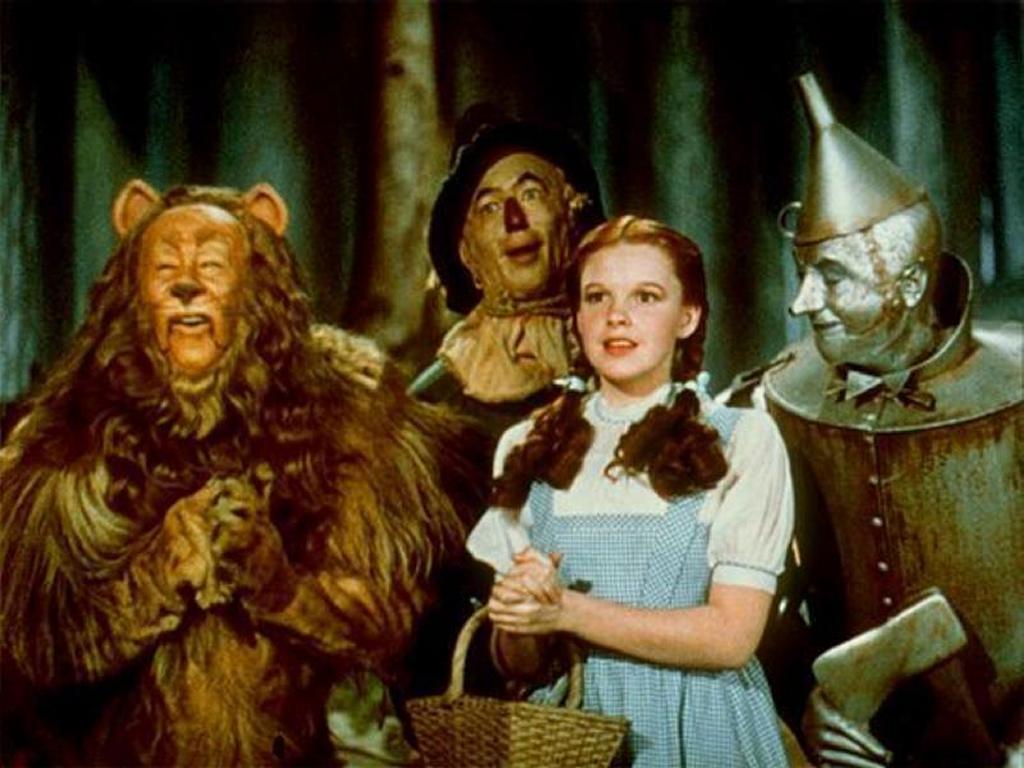
2. The Wizard of Oz (1939)

This much-loved children’s movie tells the tale of Dorothy Gale and her dog Toto in the magical Land of Oz Here she meets friends and foes in her journey to meet the Wizard of Oz, who as everyone says can help her find her way back home and can give her new friends Scarecrow, Tin Man, and Cowardly Lion the brain, heart, and courage they respectively wish for.


Image Source: blog.bryantpark.org

3. The Kid (1921)

Written and directed by Charlie Chaplin, The Kid is a heartwarming tale of an adoptive father (Charlie Chaplin) and an abandoned child (Jackie Coogan). The story unfolds with a mother leaving her baby with a pleading note in a limousine. In an unfortunate event, the car gets stolen by thieves who then leave the baby in a garbage can. Charlie’s character finds the child and raises him as his own son. This father-son relationship is challenged by questions to his fatherhood and the claims of the mother over the child. In the end, the kid reunitew with his biological mother and with his adoptive father.


Image Source: silentfilmlivemusic.blogspot.com


Colors and other elements that are deemed to define children’s movies may elude these films, but they are good films that impart good lessons . More importantly, they are devoid of violence.

Louis A. Habash is a film archivist at the San Francisco Art Institute and he sidelines as a film critic when he is not busy restoring and editing clips. Find out more about him and his passion for classical films from this page.